

Material choice directly affects the resale value of commercial vehicles because it determines how well the body holds up over years of heavy use. Panels that resist moisture, impact, and corrosion retain their structural integrity far longer than those that warp, rot, or corrode, and buyers in the used vehicle market pay a measurable premium for bodies that still perform. The questions below unpack each dimension of this relationship, from weight and deterioration to what fleet buyers actually inspect when assessing a used truck or trailer.
Which vehicle materials hold their value best over time?
Thermoplastic composite sandwich panels hold their value better than steel, aluminium, or plywood in commercial vehicle applications because they resist the three main causes of body degradation: corrosion, moisture absorption, and impact fatigue. A body that remains structurally sound and dimensionally stable after a decade of use commands a stronger resale price than one that has been patched, repainted, or partially replaced.
Steel bodies are vulnerable to rust, particularly around welds, joints, and areas where protective coatings have been breached. Once corrosion takes hold, it spreads progressively and is expensive to arrest. Aluminium resists corrosion better but is prone to denting and fatigue cracking under repeated load cycles, which affects both appearance and structural rating. Plywood floors and walls absorb moisture, swell, delaminate, and eventually rot, a process that accelerates in vehicles washed down regularly or operated in wet climates.
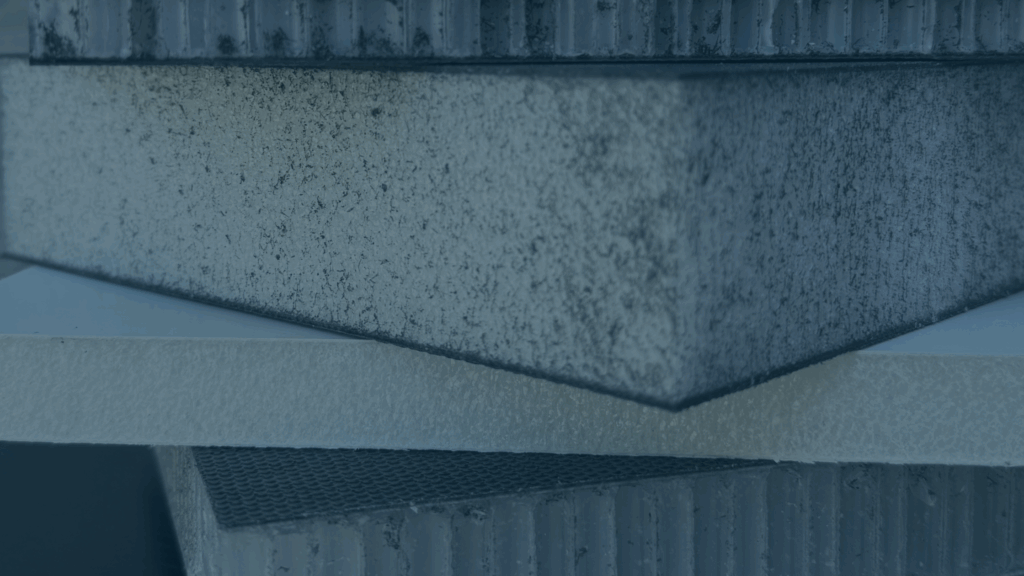
Thermoplastic composite panels, built around polypropylene honeycomb or PET foam cores with glass-fiber reinforced skins, do not rust, do not absorb water, and do not rot. Their surface finish remains stable over time, and their structural properties degrade far more slowly under normal operating conditions. For buyers assessing a used vehicle, a composite body signals lower maintenance history and lower risk of hidden structural problems, both of which translate directly into a higher offer.
How does panel weight affect a commercial vehicle’s resale price?
Panel weight affects resale price because it determines how much payload capacity the vehicle can legally carry throughout its working life. A heavier body structure eats into the gross vehicle weight rating (GVWR), reducing the net payload available for revenue-generating cargo. Buyers in the used market calculate this carefully, a vehicle with a lighter body offers more usable payload from day one, which makes it worth more.
This weight argument has become more complex in 2026 because of the growing share of electric trucks and vans entering European fleets. For diesel vehicles, excess structural weight costs money through reduced payload. For electric vehicles, it costs money twice: once through reduced payload, and again through reduced battery range per charge. Every kilogram of structural dead weight in an electric truck body shortens the distance the vehicle can travel before recharging. EV fleet buyers now treat body weight as a range specification, not just a payload specification, and this is a standard procurement question when evaluating both new builds and used vehicles.
A composite sandwich panel body built with a PP honeycomb core can weigh significantly less than an equivalent steel or aluminium body while meeting the same structural load requirements. That weight saving translates into a payload or range advantage that persists for the entire vehicle life, and that advantage is priced into the used vehicle market accordingly.
What causes body panels to deteriorate on trucks and trailers?
Body panels on trucks and trailers deteriorate through four main mechanisms: moisture ingress, corrosion, impact damage, and UV degradation. The rate at which each mechanism acts depends heavily on the panel material, and the combination of all four over a working life of ten to fifteen years is what separates panels that still look and perform well from those that require replacement.
Moisture and corrosion
Steel panels corrode when protective coatings are breached, a near-inevitable outcome after years of stone chips, pressure washing, and temperature cycling. Once rust begins at a joint or edge, it spreads beneath the surface and is difficult to remediate without cutting out and replacing sections. Plywood panels absorb moisture through cut edges, fastener holes, and surface damage, leading to swelling, delamination, and eventually structural failure. Composite panels with sealed edges and non-porous skins do not provide a pathway for moisture to reach the core, which eliminates both of these failure modes.
Impact and fatigue
Loading and unloading operations subject body panels to repeated impact from pallets, forklifts, and cargo movement. Steel dents and deforms permanently. Aluminium dents easily and can crack at stress concentrations. Thermoplastic composite panels absorb impact energy through the sandwich structure and, depending on the specification, can recover partially from low-energy impacts without permanent deformation. Continuous fiber-reinforced thermoplastic skins offer particularly high impact resistance compared to other composite constructions, a property that matters for commercial vehicle body panel applications exposed to daily loading activity.
UV and surface degradation
Exterior panels exposed to sunlight degrade over time if the surface material is not UV-stable. Fading, chalking, and surface cracking reduce both appearance and, in some cases, surface hardness. Thermoplastic composite panels with PET film surfaces can achieve over 22,000 hours of UV resistance based on Compoform’s own testing, a level of durability that maintains appearance and surface integrity well beyond the typical vehicle replacement cycle.
Does composite panel construction increase resale value?
Yes, composite panel construction increases resale value in commercial vehicles because it reduces the total maintenance burden over the vehicle’s life and preserves structural performance in ways that buyers can verify during inspection. A truck or trailer body built with thermoplastic sandwich panels typically shows less deterioration after ten years than an equivalent steel or plywood body, and that condition difference is reflected in used market pricing.
The resale argument is strongest when you consider the full lifecycle. A plywood floor in a heavy transport application typically lasts three to five years before requiring replacement. A thermoplastic composite floor, based on industry experience in comparable applications, lasts twelve years or more, eliminating two to three replacement cycles over a vehicle’s working life. Each replacement cycle carries panel cost, installation labour, and vehicle downtime. When you add those costs across a fifteen-year vehicle life, the composite floor is cheaper per year of service even at a higher initial unit price, and the vehicle arrives at resale with its original floor still intact and structurally sound.
Fleet buyers and used vehicle traders understand this. A body that has not been repaired, patched, or partially replaced is easier to inspect, easier to price, and easier to sell. Composite construction reduces the uncertainty that depresses used vehicle offers.
What do fleet buyers look for when assessing used vehicle condition?
Fleet buyers assessing used commercial vehicles focus on structural integrity, maintenance history, payload capacity, and the condition of load-bearing surfaces. Body panel condition is one of the first things a buyer inspects because it signals how the vehicle was operated and how much remedial work will be required before the vehicle re-enters service.
Specific inspection points include:
- Floor condition: Buyers check for soft spots, delamination, surface cracking, and edge deterioration, all signs of moisture damage in plywood floors. A composite floor with no soft spots and intact edges requires no immediate intervention.
- Wall panel integrity: Dents, cracks, and repaired sections indicate impact history. Buyers discount vehicles with visible repair patches because they signal unknown structural history.
- Corrosion at joints and edges: Steel-framed bodies are inspected closely at welds, corner joints, and door frames. Rust at these points is expensive to treat and often indicates deeper corrosion that is not visible.
- Payload documentation: Buyers increasingly request the tare weight of the body to calculate available payload. A lighter body structure directly increases the net payload figure, which affects the vehicle’s commercial utility and therefore its price.
- EV compatibility and range data: In 2026, buyers sourcing vehicles for electric fleets also assess body weight as a range factor. A lighter composite body extends the effective range of an electric truck, which is a quantifiable operational advantage that buyers are beginning to price explicitly.
A vehicle with a composite body in good condition passes most of these inspection points more easily than an equivalent steel or plywood body of the same age, which is why composite construction supports stronger resale outcomes.
When should a manufacturer switch materials to protect resale value?
A manufacturer should consider switching body panel materials when the current material is generating recurring maintenance costs, reducing payload capacity, or producing vehicles that depreciate faster than competitors in the used market. The right moment to switch is before these problems become visible to end customers, not after resale values have already been affected.
Practical triggers that indicate a material switch is worth evaluating include:
- Floor or wall panels requiring replacement within the first five years of vehicle life
- Customer complaints about moisture damage, delamination, or corrosion in body panels
- Used vehicle buyers discounting offers due to body condition
- Fleet operators specifying composite panels in tender requirements, effectively requiring suppliers to source composite bodies
- EV fleet procurement teams asking for body weight data as part of range calculations
The last two points reflect a structural shift in how European fleet operators specify vehicles in 2026. End users are increasingly writing composite material requirements into procurement specifications, which means OEMs and body builders who have not yet made the switch face a growing risk of being excluded from tenders. Switching materials at that point is reactive. Switching earlier, when the commercial case is clear but the market pressure is not yet acute, gives manufacturers time to optimise their production process and build a track record with the new material before it becomes a competitive requirement.
A 30 mm PP honeycomb sandwich panel floor, for example, is self-supporting and requires no aluminium subframe, removing a production step and reducing assembly cost for truck body builders. That kind of structural efficiency makes the switch commercially attractive on its own terms, independent of the resale value argument.
How Compoform Helps You Protect Commercial Vehicle Resale Value
We manufacture thermoplastic sandwich panels with PP honeycomb and PET foam cores, engineered specifically for commercial vehicle applications including truck bodies and trailers. Every panel we produce is built to maintain structural performance over a working life that outlasts conventional alternatives, which means the vehicles built with our panels arrive at resale in better condition.
Here is what working with us looks like in practice:
- Panel configuration matched to your application: We review your body design and specify the right core material, skin layup, and panel thickness for your load requirements, not a generic off-the-shelf solution.
- Custom dimensions cut to your exact specification: Panels are available in dimensions up to 13,500 mm × 2,950 mm, eliminating the joins and patchwork that create weak points in the body structure.
- Edge sealing and edge bending as standard: Sealed edges protect the core from moisture ingress during regular washdowns, a detail that directly affects long-term panel condition and resale presentation.
- Thermoplastic panels that last 3 to 4 times longer than plywood in heavy transport: Based on our experience in comparable applications, composite floors reach 12 or more years of service life versus 3 to 5 years for plywood, eliminating two to three replacement cycles over a vehicle’s life, based on Compoform’s application experience in heavy transport.
- EV-ready weight performance: Our panels reduce body tare weight, which extends battery range in electric trucks and vans, a specification that EV fleet buyers are actively requesting in 2026.
We work as an application partner, not a panel supplier. That means we review your design, flag integration issues before production starts, and support you through the build process and beyond. If you are evaluating a material switch for your truck body or trailer production, speak with our engineering team about your application, we will help you build the commercial case before you commit.
Related Articles
- How are sandwich panel manufacturers reducing waste in production?
- What sandwich panels are used in aircraft interior construction?
- What are the best sandwich panels for truck body construction?
- How to cut and fabricate lightweight panels without specialist tools?
- How to evaluate panel materials for weight-sensitive applications?