

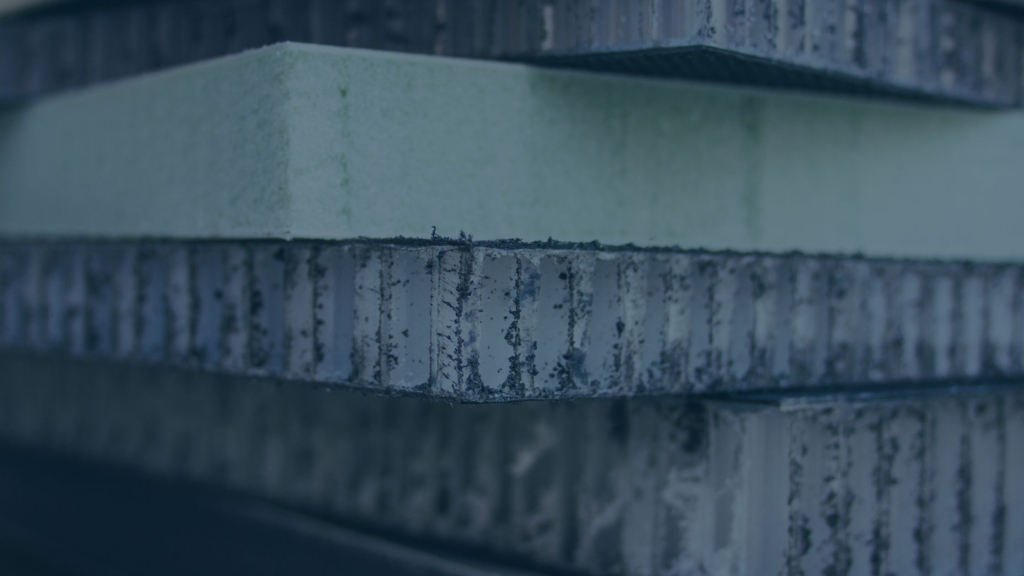
Yes, sandwich panels can be printed and branded. The smooth, consistent surface of thermoplastic composite panels accepts digital printing, vinyl wrapping, and paint finishes well, making them a practical choice for fleet livery, branded vehicle bodies, and commercial signage applications. The sections below address the most common questions about printing methods, durability, surface preparation, and size constraints.
What printing and branding methods work on sandwich panels?
The most widely used methods for branding sandwich panels are vinyl wrapping, direct digital printing, and paint application. Each suits different production volumes, design complexity, and durability requirements. For commercial vehicle bodies and trailer panel applications, vinyl wrapping is the most common approach because it allows full-colour graphics, is replaceable without damaging the substrate, and can be applied post-assembly.
Direct UV printing onto the panel surface is increasingly available and works well where graphics are fixed and high-volume runs make the setup cost worthwhile. Paint, including two-component polyurethane and epoxy-based systems, is used where a uniform colour finish is needed rather than detailed graphics.
The method that works best depends on the surface finish of the panel itself. Panels with a white PET-film surface provide a clean, consistent base that is well-suited to vinyl application and direct printing. The controlled colour properties of PET-film surfaces, including a high whiteness index, mean colours reproduce accurately without the tonal variation you would get on a raw composite surface.
Can sandwich panels be branded during the manufacturing process?
Yes, branding can be integrated at the manufacturing stage through co-laminated coloured films or pre-coloured skins. Rather than applying graphics after the panel is made, a coloured or printed film is bonded to the panel surface during production, becoming a permanent part of the laminate structure. This approach is more durable than post-production surface treatments because the finish is not a separate layer that can peel or delaminate.
For fleet operators and truck body builders who want a consistent corporate colour across a vehicle body, specifying a coloured skin at the manufacturing stage removes a downstream finishing step entirely. The panel arrives ready to assemble without requiring a paint shop or wrap facility.
Custom coloured films are available in a range of standard and RAL-matched colours, though the specific options depend on the panel configuration and production run volume. For high-volume OEM customers, this is a straightforward specification decision. For lower volumes, post-production vinyl or paint is typically more practical.
How durable is a printed or branded finish on a composite panel?
Durability depends on the method used, but thermoplastic sandwich panels with PET-film surfaces offer a strong base for long-lasting finishes. PET-film surfaces on Compoform wall panels are tested to over 22,000 hours of UV resistance (ISO 4892), which means the substrate itself will not yellow or degrade under prolonged sun exposure. The longevity of the branded finish then comes down to the quality of the print or wrap material applied on top.
Vinyl wraps applied to composite panels in commercial vehicle applications typically last between five and seven years under normal operating conditions, depending on exposure to washing chemicals, UV intensity, and physical abrasion. High-quality cast vinyl outperforms calendered vinyl significantly in this regard, particularly on curved or complex surfaces.
Co-laminated coloured films bonded during manufacturing offer the longest service life because they are protected by the same UV-resistant PET layer as the rest of the panel surface. For scaffolding boards and truck body exteriors that are regularly washed down or exposed to the elements, this integrated approach is more reliable than surface-applied graphics over the long term.
One practical consideration for transport applications: as fleets transition to electric trucks and vans, vehicle bodies are being specified with lighter composite panels to extend battery range. A lighter panel that also carries a durable branded finish removes the need for a separate wrap or paint step, which reduces both vehicle weight and finishing cost.
What surface preparation is needed before printing on sandwich panels?
Surface preparation requirements vary by finish type, but the starting point is always a clean, dry, and contamination-free surface. For panels with a PET-film surface, the film provides a consistent, non-porous substrate that requires minimal preparation before vinyl application. Wiping with isopropyl alcohol to remove any handling residue or dust is typically sufficient.
For direct printing or paint application, the process is more involved:
- Degreasing: Remove any release agents, oils, or handling contamination with an appropriate solvent cleaner.
- Light abrasion: A fine scuff or mechanical abrasion improves adhesion for paint systems, particularly on smooth PET-film surfaces where the low surface energy of the film can reduce paint bonding.
- Primer application: A suitable adhesion primer matched to the paint system and the panel surface material is recommended before applying two-component paint coatings.
- Dust removal: In a paint environment, tack-cloth the surface immediately before application to remove any airborne particles.
Thermoplastic surfaces, including polypropylene-based skins, have inherently low surface energy, which means standard paints and adhesives may not bond well without the correct primer or surface treatment. Flame treatment or plasma treatment can raise the surface energy of thermoplastic skins and significantly improve adhesion, particularly for direct printing applications. Confirming the surface treatment requirement with your paint or print supplier before production avoids adhesion failures in service.
Are there size or shape limitations for branded sandwich panels?
Panel size directly affects what branding methods are practical. Large-format panels present no obstacle for vinyl wrapping or paint, but direct digital printing is constrained by the print bed size of the equipment used. For commercial vehicle bodies, where panels can run the full length of a trailer side, vinyl is the most scalable method because it can be applied in sections with invisible joins when done correctly.
In terms of panel dimensions, thermoplastic sandwich panels for commercial vehicle and scaffolding applications are available in very large formats. Panels up to 13,500 mm long and 2,900 mm wide can be produced, which means a single panel can cover a significant portion of a truck body side without joins. For branding purposes, fewer panel joins mean cleaner graphic alignment and a more professional finished appearance.
Shape is a separate consideration. Flat panels present no difficulty for any branding method. Panels that have been thermoformed or edge-bent introduce surface curvature that requires cast vinyl rather than calendered vinyl, and makes direct printing impractical without specialist equipment. For most truck body and trailer applications, panels are flat, so shape is not a limiting factor.
Panel thickness does not affect branding method selection directly, but it does influence how the panel is handled during finishing. Thicker, heavier panels require appropriate handling equipment in a finishing facility, which is worth confirming with your fabrication partner before specifying a post-production branding process.
How Compoform Helps with Branded Sandwich Panels
We work with truck body builders, trailer manufacturers, and fleet operators who need panels that are ready to brand, not panels that create extra work downstream. Here is what that means in practice:
- Surface specification from the start: We help you choose the right skin finish for your branding method, whether that is a white PET-film surface for vinyl wrapping, a coloured co-laminated film for a factory-finished look, or a surface profile suited to direct printing.
- Custom panel dimensions: Panels are available cut to your exact specification, up to 13,500 mm × 2,900 mm, reducing joins in finished vehicle bodies and giving your graphics team a cleaner canvas.
- Application review before production: Before panels go into production, we review your assembly and finishing process to flag any surface treatment, adhesion, or handling requirements that could affect the branded finish in service.
- Durable substrates for demanding environments: Our PET-film surfaces are tested to over 22,000 hours of UV resistance, giving the branded finish a substrate that will not degrade before the wrap or paint does.
If you are specifying panels for a vehicle body or trailer where branding consistency matters, talk to us about your panel specification before you finalise the surface specification. We review your design, confirm the right panel configuration for your finishing process, and support you through integration, not just the initial order.