

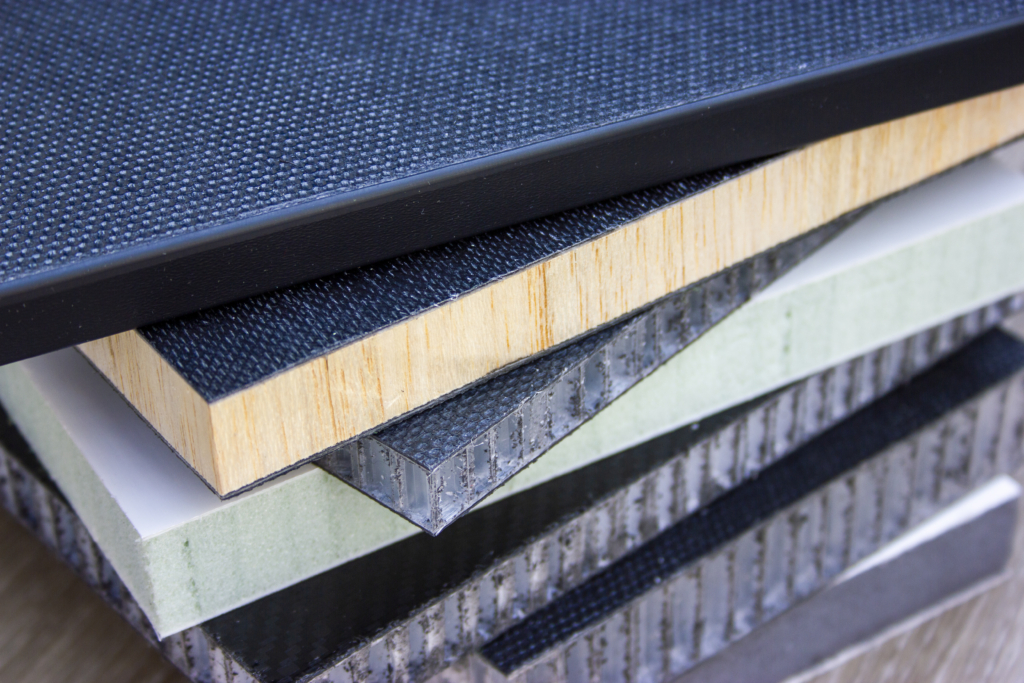
Thermoplastic sandwich panels can be recycled at end of life. Because both the PP honeycomb or PET foam core and the glass-fibre-reinforced thermoplastic skins are based on thermoplastic polymers, the material can be remelted and reprocessed rather than sent to landfill. This is a meaningful distinction from thermoset composites, which cannot be melted down once cured. The questions below unpack how that recycling process works in practice, what happens to each material stream, and why recyclability is becoming a procurement consideration for European manufacturers.
This article covers the broader sandwich panel market. Compoform’s range is limited to PP honeycomb and PET foam cores for commercial vehicles and scaffolding applications.
Can thermoplastic sandwich panels be recycled?
Yes, thermoplastic sandwich panels can be recycled. The thermoplastic matrix in the skins and the thermoplastic core material both soften when heated, which means they can be reprocessed at end of life. This is the defining recyclability advantage of thermoplastic composites over thermoset alternatives, and it is increasingly relevant for European manufacturers facing tightening sustainability requirements.
The practical picture is more nuanced than a simple yes. Recycling thermoplastic composites is technically feasible, but it requires the right infrastructure and, in some cases, material separation steps. Panels that combine glass fibre with a PP matrix, for example, cannot be recycled through a standard plastic stream. They need a process capable of handling fibre-reinforced material. That said, the thermoplastic nature of the matrix means the polymer fraction can be recovered and reused, which is not possible with thermoset composites at all.
For truck body builders and trailer manufacturers, this matters beyond environmental preference. European regulations are tightening around end-of-life material recovery, and procurement teams at fleet operators increasingly ask suppliers to demonstrate a credible end-of-life pathway for the materials they specify.
How does thermoplastic composite recycling actually work?
Thermoplastic composite recycling works by applying heat to soften the polymer matrix, which allows the material to be reprocessed. The most common industrial method is mechanical recycling: panels are shredded or granulated, and the resulting material is used as a filler or reinforcement in lower-grade applications. More advanced thermal and chemical processes can recover higher-value fractions from the polymer and fibre content.
Mechanical recycling
Mechanical recycling is the most widely available route for thermoplastic sandwich panels today. The panel is shredded into granules or flakes. The resulting material, which contains both polymer and short glass fibres, is then compounded into injection-moulded parts, non-structural panels, or other products where some reduction in mechanical performance is acceptable. The process is relatively straightforward and does not require specialist chemical infrastructure.
Thermal and chemical recycling
More advanced routes include pyrolysis, which uses heat in a low-oxygen environment to break down the polymer matrix and recover the glass fibre in a cleaner form. Chemical recycling processes can go further, recovering polymer fractions at a molecular level. These routes are less widely deployed at industrial scale in Europe today, but investment in this infrastructure is growing, partly driven by regulatory pressure on composite-intensive industries.
For manufacturers specifying panels for truck bodies or trailers, the practical question is whether a recycling partner exists in their region who can handle fibre-reinforced thermoplastic material. This is worth confirming at the design stage rather than at end of life.
How do thermoplastic panels compare to thermoset composites at end of life?
Thermoplastic panels have a clear end-of-life advantage over thermoset composites. Thermoset materials, such as fibre-reinforced polyester or epoxy-based composites, undergo an irreversible chemical cure during manufacture. Once cured, they cannot be remelted. At end of life, thermoset composites are typically shredded for use as filler material, incinerated for energy recovery, or sent to landfill. None of these routes recover the polymer fraction in a reusable form.
Thermoplastic composites, by contrast, retain a meltable matrix throughout their service life. This means the polymer can, in principle, be recovered and reused in a new product. The glass fibre content complicates direct polymer recycling, but the thermoplastic matrix still opens routes that are simply not available for thermoset materials.
For European OEMs and body builders, this distinction is becoming commercially relevant. Thermoset panels may carry a lower unit price, but they create a disposal liability at end of vehicle life that thermoplastic panels do not. As sustainability reporting requirements expand under frameworks like the CSRD, being able to demonstrate a credible material recovery pathway for structural components is moving from a nice-to-have to a compliance consideration.
What happens to the glass fibre and core materials during recycling?
During recycling, the glass fibre and core materials follow different pathways depending on the process used. In mechanical recycling, the glass fibres are broken down into shorter lengths and remain embedded in the granulated material. The PP honeycomb or PET foam core is shredded alongside the skins. In more advanced thermal processes, the glass fibre can be recovered in a longer, cleaner form that retains more of its original mechanical value.
The glass fibre content in thermoplastic skins, which in Compoform’s panels runs at 66 to 67% by weight according to ASTM D5630 testing, is high enough that it meaningfully affects the recyclate’s properties. Recycled material containing short glass fibre is useful as a reinforcing filler in injection moulding applications, even if it does not match the performance of virgin fibre-reinforced material.
The PP core, whether in honeycomb or foam form, is a relatively clean thermoplastic fraction. In an ideal separation scenario, the core material could be recovered separately and recycled through a standard PP stream. In practice, most end-of-life recycling processes handle the panel as a combined material rather than separating core from skin, which means the glass fibre and polymer fractions are processed together. Designing panels with recyclability in mind, including minimising adhesive layers that complicate separation, can improve the quality of the recovered material.
Do EU regulations affect how composite panels must be disposed of?
Yes, EU regulations directly affect how composite panels used in vehicles must be handled at end of life. The EU End-of-Life Vehicles (ELV) Directive sets recovery and recycling targets for vehicles placed on the European market. Under the current framework, manufacturers and their supply chains are required to demonstrate that materials used in vehicle construction can meet defined recovery rates. A revised ELV Regulation, which has been progressing through the EU legislative process, is expected to tighten these requirements further and extend producer responsibility obligations.
For truck body builders and trailer manufacturers, this has a practical consequence. If a structural panel material cannot demonstrate a credible recycling pathway, it creates a compliance risk for the vehicle manufacturer at end of life. Thermoplastic composite panels, with their reprocessable matrix, are better positioned to satisfy these requirements than thermoset alternatives.
Beyond the ELV framework, the Corporate Sustainability Reporting Directive (CSRD) requires larger European companies to report on the environmental impact of their supply chains, including material choices and end-of-life outcomes. This is pushing sustainability criteria further up the procurement agenda, including for mid-volume OEMs who supply to larger fleet operators subject to CSRD reporting.
Should manufacturers choose thermoplastic panels partly for recyclability?
Recyclability should be one factor in the decision, but it works alongside performance, weight, and total cost of ownership rather than independently. For manufacturers in commercial vehicles and scaffolding, the primary case for thermoplastic sandwich panels remains their structural performance at low weight. Recyclability strengthens that case, particularly where regulatory compliance or customer sustainability requirements are part of the procurement conversation.
The weight argument is worth stating clearly. Lighter body structures reduce fuel consumption in diesel vehicles and extend battery range in electric trucks and vans. For fleet operators transitioning to EVs, every kilogram of structural dead weight reduces range per charge. This makes weight reduction a range argument, not just a payload argument, and it is a standard procurement question from EV fleet buyers in 2026. A thermoplastic sandwich panel that is lighter than steel or plywood, lasts significantly longer in service, and carries a credible recycling pathway addresses three procurement concerns at once.
Over a 15-year vehicle life, a composite floor eliminates two to three plywood replacement cycles. Once you factor in panel cost, installation labour, and vehicle downtime, the thermoplastic panel is cheaper per year of service even at a higher unit price. Adding a demonstrable end-of-life recycling route to that calculation makes the total cost of ownership argument more complete, not just more sustainable.
Manufacturers who are already specifying thermoplastic panels for performance and longevity reasons are well positioned to use recyclability as an additional differentiator with their own customers, particularly fleet operators and logistics companies who face their own sustainability reporting obligations.
How Compoform Supports End-of-Life Planning for Thermoplastic Panels
We work with truck body builders, trailer manufacturers, and scaffolding companies who need to think beyond the initial panel specification. End-of-life recyclability is increasingly part of that conversation, and we approach it as part of the broader design and material selection process rather than an afterthought.
Here is what that looks like in practice when you work with us:
- Material transparency: We provide full material composition data for our PP honeycomb and PET foam core panels, including glass fibre content by weight, so your sustainability team or compliance function has the information needed to model end-of-life recovery rates.
- Panel design for recyclability: Where possible, we review panel construction with end-of-life separation in mind, including adhesive choices and edge treatments that affect how cleanly a panel can be processed at end of life.
- Longevity as the first sustainability argument: A thermoplastic panel that lasts 12 or more years in heavy transport service eliminates two to three replacement cycles compared to plywood. Fewer panels manufactured and disposed of over a vehicle’s life is itself a sustainability outcome, before recycling is even considered.
- Regulatory support: If your procurement team or customers are asking questions about ELV Directive compliance or CSRD material reporting, we can provide the technical documentation to support those conversations.
We review each customer’s application, assembly process, and operating environment before recommending a panel configuration. If end-of-life requirements are part of your specification, bring them into the conversation early. Talk to our engineering team about your application and we will work through the material and design options with you.
Related Articles
- How does PP honeycomb compare to aluminium honeycomb in transport sandwich panels?
- Why is recyclability becoming a key factor in sandwich panel selection?
- Why is traditional material weight hurting your vehicle's fuel costs?
- What is the difference between continuous and batch lamination?
- What happens to sandwich panels at end of life?