

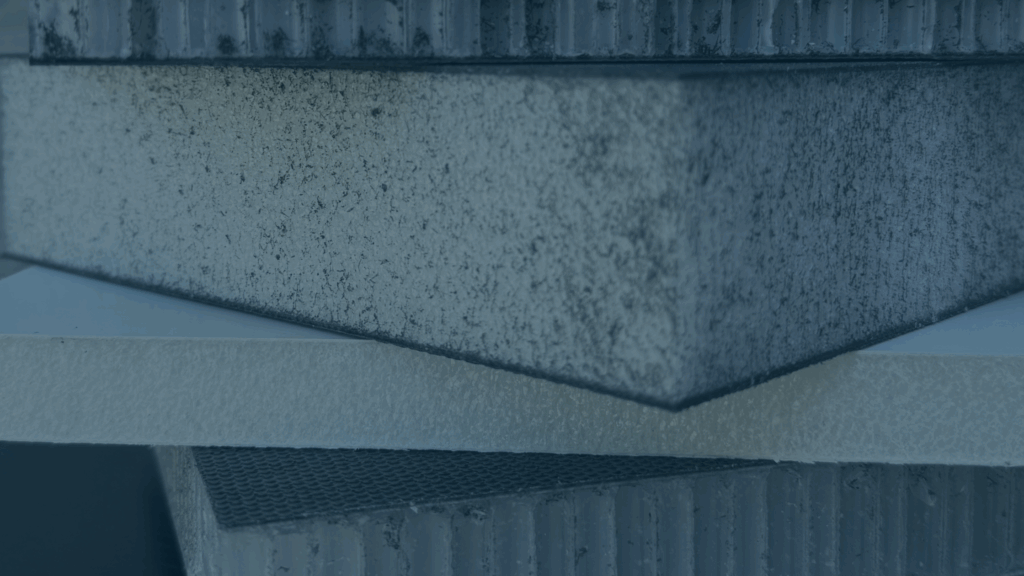
Lightweight sandwich panels improve driver safety by reducing overall vehicle weight, which lowers the center of gravity, shortens braking distances, and makes the vehicle more responsive to steering inputs. The effect is most pronounced in tall commercial vehicles, trucks, trailers, and cargo boxes, where high structural mass amplifies instability during cornering and emergency maneuvers. The questions below unpack the specific mechanisms behind this safety benefit.
How does vehicle weight affect handling and driver control?
Heavier vehicles are harder to control because inertia resists changes in direction and speed. When a driver steers or brakes, the vehicle’s mass determines how quickly it responds. A heavier structure demands more braking force to stop at the same speed, takes longer to change direction, and places greater stress on suspension and tyre contact patches, all of which reduce the driver’s margin for error.
In commercial vehicles, this effect compounds. A truck body built from steel or plywood carries significant structural dead weight before a single kilogram of cargo is loaded. That dead weight contributes to total vehicle mass throughout every journey, whether the vehicle is fully loaded or running empty. Reducing structural weight directly reduces the mass the driver is managing at all times.
In 2026, this matters beyond payload alone. EV fleet operators face an additional constraint: every kilogram of structural dead weight reduces battery range per charge. Lighter body structures extend range in electric trucks and vans, which is now a standard procurement question from EV fleet buyers. Weight reduction is a range argument as much as a payload argument.
How much weight can sandwich panels save compared to steel or wood?
Thermoplastic sandwich panels can reduce body panel weight significantly compared to steel or plywood, depending on panel thickness, core type, and the specific steel or timber grade being replaced. The weight saving comes from the panel’s construction: a lightweight polymer core, PP honeycomb or PET foam, bonded between glass-fibre-reinforced thermoplastic skins delivers structural performance at a fraction of the mass of solid metal or timber.
To put this in concrete terms: a 30mm PP honeycomb sandwich floor panel is self-supporting with no aluminium subframe required. Eliminating the subframe removes a substantial secondary structure from the vehicle entirely, compounding the weight saving beyond the panel material itself. For truck body builders, this also removes a production step and reduces assembly cost.
Plywood floors in heavy transport typically need replacement every three to five years. A thermoplastic composite floor lasts twelve or more years under comparable conditions, eliminating two to three replacement cycles over a vehicle’s working life. When you factor in panel cost, installation labour, and vehicle downtime across a fifteen-year service life, the composite floor is cheaper per year of service even at a higher unit price.
Why does a lower center of gravity improve road safety?
A lower center of gravity improves road safety because it reduces the rotational force that tips a vehicle onto its side during cornering or sudden lane changes. When a vehicle corners, lateral acceleration acts through its center of gravity. The higher that point sits above the road surface, the greater the overturning moment, the force trying to roll the vehicle. Lowering the center of gravity directly reduces this risk.
For tall commercial vehicles, curtainsiders, box trailers, refrigerated bodies, this is a practical concern on every journey. The body structure sits high, and if that structure is built from heavy materials, it raises the center of gravity further. Replacing steel or timber panels with lightweight sandwich panels shifts mass downward, improving lateral stability without any change to the vehicle’s geometry or suspension setup.
The benefit is most visible in loaded vehicles taking motorway slip roads or roundabouts at speed, and in emergency avoidance maneuvers where a driver must steer sharply to avoid an obstacle. A lower center of gravity gives the driver more room to act before the vehicle reaches its rollover threshold.
What structural properties make sandwich panels safe for load-bearing applications?
Sandwich panels achieve structural safety through their layered construction: stiff, glass-fibre-reinforced skins bonded to a lightweight core. The skins carry tensile and compressive loads, while the core resists shear and keeps the skins separated, a geometry that delivers high bending stiffness relative to weight. The result is a panel that resists deflection and failure under load without the mass of solid materials.
Core selection determines how a panel performs under specific load conditions. PP honeycomb cores deliver high bending and compressive performance, making them well suited to floor panels that must support concentrated point loads from pallets, forklifts, or cargo. PET foam cores offer a different stiffness-to-weight profile suited to wall cladding and applications where distributed loads dominate.
Skin architecture also matters. A cross-ply laminate, fibres oriented at 0° and 90° in alternating layers, equalises mechanical properties in both directions, so the panel performs consistently regardless of installation orientation. This is relevant for truck body walls and trailer cladding where load direction is not always predictable.
For scaffolding applications, where panels must span unsupported and carry personnel loads, EN 12811 load class 4 has been achieved by an 11mm Compoform panel with no support underneath, a direct, tested reference point for structural adequacy in a demanding safety-critical context.
Which vehicle types benefit most from lightweight panel upgrades?
The vehicle types that benefit most from lightweight sandwich panel upgrades are those where structural dead weight directly competes with payload capacity, range, or stability: truck bodies, curtainsiders, box trailers, refrigerated vehicles, and cargo vans. These vehicles carry large panel surface areas, floors, walls, roofs, and doors, so replacing heavy materials across the full body produces a meaningful cumulative weight reduction.
Horse vans and specialist transport vehicles benefit for similar reasons, with the added factor that animal welfare regulations and vehicle stability requirements make handling predictability a priority. Coachbuilding and specialist vehicle applications, including buses and mobile homes, also gain from reduced structural mass, particularly where passenger comfort and fuel or energy efficiency are commercial priorities.
In 2026, electric truck and van operators represent a growing segment where the benefit extends beyond payload. Lighter body structures directly extend battery range per charge, which affects route planning, charging infrastructure requirements, and total operating cost. For EV fleet procurement teams, the weight of the body structure is now part of the range calculation, not a secondary consideration.
How Compoform Supports Safer, Lighter Vehicle Builds
We work with truck body builders, trailer manufacturers, and specialist vehicle assemblers across Europe to replace steel, aluminium subframes, and plywood with thermoplastic sandwich panels engineered for the specific load demands of each application. Here is what that looks like in practice:
- Panel configuration matched to your load case: We review your floor load requirements, wall span dimensions, and assembly process before specifying a panel. PP honeycomb floors, PET foam wall panels, and cross-ply or multi-ply skin architectures are selected based on your actual structural requirements, not a generic catalogue recommendation.
- Custom dimensions cut to your specification: Panels are available up to 13,500mm × 2,900mm and cut to your exact dimensions, eliminating on-site trimming and reducing waste in your production line.
- Self-supporting floor panels that remove the subframe: A 30mm PP honeycomb floor panel carries load without an aluminium subframe underneath. This removes a production step, reduces total vehicle weight, and lowers your assembly cost.
- Durability that reduces replacement cycles: Thermoplastic composite floors last twelve or more years in heavy transport use. Over a fifteen-year vehicle life, that eliminates two to three plywood replacement cycles, and the labour and downtime that comes with each one.
- Edge protection for wash-down environments: Edge sealing and edge bending protect the core from moisture ingress, which matters for truck floors and scaffolding boards that are regularly cleaned under pressure.
We do not ship panels to a specification and step back. We review your design, flag integration issues before production starts, and support you through the build process. If you are evaluating a switch from steel, plywood, or aluminium subframe construction, speak with our engineering team about the specific configuration for your vehicle type and production volume.
Related Articles
- What is the true cost of carrying excess dead weight in a freight vehicle?
- Why is steel no longer the default choice for vehicle body construction?
- What is a mono-material sandwich panel and why does it matter for recycling?
- What face sheet materials are used on composite sandwich panels?
- What core materials are used in sandwich panels?