

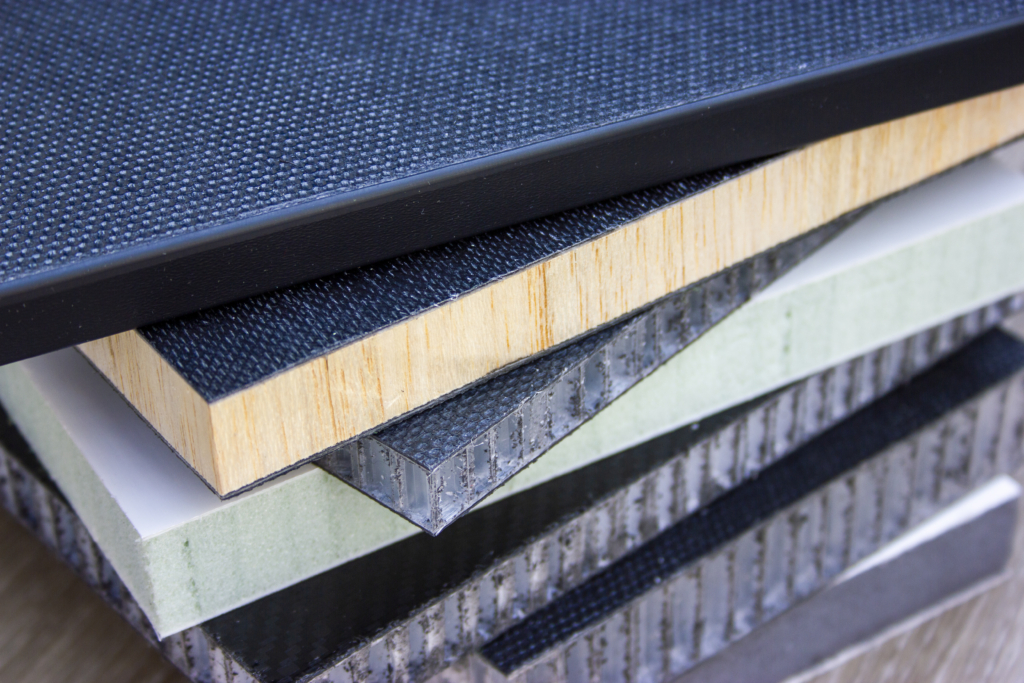
PP honeycomb sandwich panels carry a significantly lower carbon footprint than aluminium panels across their full lifecycle. The primary driver is production energy: aluminium smelting is one of the most energy-intensive industrial processes in manufacturing, while thermoplastic composite panels require far less energy to produce. For European truck body builders, trailer manufacturers, and scaffolding companies, this difference translates into measurable sustainability gains at both the product and fleet level.
The sections below work through the most common questions buyers ask when evaluating PP honeycomb panels against aluminium on environmental grounds, covering manufacturing emissions, in-service weight savings, recyclability, and which industries see the greatest sustainability benefit.
How do PP honeycomb panels and aluminium panels compare in carbon footprint?
PP honeycomb sandwich panels produce substantially fewer greenhouse gas emissions than aluminium panels when you account for the full production cycle. Aluminium production is highly energy-intensive, requiring large amounts of electricity to smelt bauxite ore into usable metal. Thermoplastic composite panels, by contrast, are manufactured through a continuous lamination process that consumes considerably less energy per square metre of finished panel.
The carbon footprint comparison becomes even more favourable for PP honeycomb when you factor in the weight difference. A 30 mm PP honeycomb floor panel weighs around 7,600 g/m², while a structurally comparable aluminium panel is typically heavier. That weight difference compounds over the vehicle’s operating life through fuel and energy consumption, which we cover in the next section.
It is also worth noting that the carbon intensity of aluminium varies significantly depending on whether it is primary (smelted from ore) or secondary (recycled). Secondary aluminium carries a much lower footprint, but supply is constrained and quality consistency can vary. PP honeycomb panels, manufactured from polypropylene and glass fibre, do not carry the same upstream energy burden regardless of batch origin.
For European OEMs subject to Corporate Sustainability Reporting Directive (CSRD) obligations in 2026, the ability to document lower embodied carbon in structural components is increasingly a procurement requirement, not just a preference. Choosing a lower-carbon panel material contributes directly to Scope 3 emissions reductions that CSRD reporting demands.
How does vehicle weight reduction with PP honeycomb panels lower emissions?
Every kilogram removed from a vehicle’s structure reduces the energy required to move it. In diesel trucks, lighter body structures improve fuel efficiency directly. In electric trucks and vans, the benefit is twofold: lighter structures extend battery range per charge and increase payload capacity simultaneously, making weight reduction a range argument as much as a payload argument.
This is a standard procurement question from EV fleet buyers in 2026. Lighter body structures extend battery range in electric trucks and vans, and every kilogram of structural dead weight reduces range per charge. For fleet operators specifying electric vehicles, a composite body that saves 200 to 400 kg compared to a steel or aluminium equivalent can meaningfully extend daily operating range without increasing battery size or cost.
Weight savings in commercial vehicle bodies
In truck body and trailer applications for commercial vehicle panels, the structural panels used for floors, walls, and roofs represent a significant portion of total body weight. Replacing aluminium or steel panels with PP honeycomb composites reduces dead weight in the structure itself, freeing that capacity for revenue-generating cargo. In many European jurisdictions, gross vehicle weight limits are fixed, so every kilogram saved in structure is a kilogram that can legally carry payload.
Cumulative emissions reduction over a vehicle’s life
The emissions benefit of weight reduction is not a one-time gain. It accumulates across every kilometre the vehicle operates. Over a 15-year vehicle life with high annual mileage, the fuel or energy savings from a lighter body structure add up to a substantial reduction in total operational emissions. This makes the environmental case for composite panels stronger the longer the vehicle remains in service, which aligns well with the extended service life that thermoplastic panels deliver compared to plywood or aluminium alternatives.
Are PP honeycomb sandwich panels recyclable at end of life?
PP honeycomb sandwich panels are thermoplastic composites, which means the polymer matrix can be remelted and reprocessed at end of life. This distinguishes them from thermoset composites, which cannot be melted down once cured. The polypropylene core and thermoplastic skins can be mechanically recycled, though the glass fibre content means the recycled material is typically downcycled into lower-grade applications rather than returned to the same performance level.
For European OEMs, this matters because the EU End-of-Life Vehicles (ELV) Directive sets mandatory recyclability and recoverability targets for vehicles placed on the European market. Thermoplastic composite panels contribute more favourably to ELV compliance calculations than thermoset alternatives, which are significantly harder to process at end of life. As the ELV Directive is updated to reflect stricter circular economy targets, the recyclability of structural components will become an increasingly active compliance consideration.
Aluminium, by contrast, is highly recyclable and retains much of its value in the secondary materials market. This is a genuine advantage for aluminium at end of life. However, the overall lifecycle assessment still favours thermoplastic composites in many transport applications when you weigh the lower production energy, the weight-driven operational savings, and the extended service life against aluminium’s superior end-of-life recyclability.
What makes thermoplastic composites more sustainable than aluminium in manufacturing?
Thermoplastic composite panels are more sustainable to manufacture than aluminium panels primarily because they require less energy to produce and generate lower process emissions. The continuous lamination process used to produce PP honeycomb sandwich panels operates at lower temperatures and with less energy input than the electrolytic reduction process required to produce primary aluminium.
There are several additional manufacturing sustainability factors worth understanding:
- No heavy metal surface treatments: Aluminium panels often require anodising, chromating, or other surface treatments that involve chemicals requiring careful waste management. Thermoplastic composite panels with integrated PET film or anti-skid surfaces require no post-production chemical treatment.
- Longer service life reduces replacement frequency: Thermoplastic panels last three to four times longer than plywood in heavy transport applications, typically 12 or more years compared to three to five years for plywood. Over a 15-year vehicle life, this eliminates two to three replacement cycles, reducing the total material and energy consumed across the vehicle’s operating life. Once you add panel cost, installation labour, and vehicle downtime, the composite is cheaper per year of service even at a higher unit price.
- No subframe required for floor applications: A 30 mm PP honeycomb sandwich floor panel is self-supporting and requires no aluminium subframe. This removes a production step, reduces the total material input into the vehicle body, and lowers the overall weight of the structure.
- European production: Panels manufactured in Europe carry shorter supply chains than materials sourced from outside the continent, reducing transport-related emissions in the supply chain.
Which industries benefit most from switching to PP honeycomb panels for sustainability?
Commercial vehicle manufacturing and scaffolding are the sectors where the sustainability benefits of switching from aluminium or steel to PP honeycomb sandwich panels are most direct and most measurable. Both industries operate under weight constraints, face increasing regulatory pressure on emissions, and use structural panels in high-volume, repeatable applications where material choice has a compounding effect across large fleets or equipment pools.
Commercial vehicles: trucks, trailers, and cargo bodies
Truck body builders and trailer manufacturers benefit from PP honeycomb panels across multiple sustainability dimensions simultaneously. Lighter body structures reduce operational emissions over the vehicle’s life. Longer panel service life reduces replacement material consumption. And in the growing electric truck segment, lighter structures directly extend battery range per charge, which is a procurement-level specification requirement for an increasing number of European fleet operators in 2026.
For cargo box and refrigerated body manufacturers, the combination of low weight, structural performance, and thermal properties makes PP honeycomb panels a practical replacement for aluminium-framed constructions that add unnecessary dead weight to every journey.
Scaffolding and temporary structures
Scaffolding boards and working platforms made from PP honeycomb composites are lighter to handle and transport than aluminium or timber equivalents, reducing the energy consumed in moving and erecting temporary structures across construction sites. The extended service life of composite scaffolding boards also reduces the volume of material that needs to be replaced across a scaffolding company’s equipment pool over time.
How Compoform Helps You Reduce Environmental Impact with Sandwich Panels
We manufacture PP honeycomb and PP foam core sandwich panels for commercial vehicle bodies and scaffolding applications from our facilities in the Netherlands. Every panel we produce is 100% European-made, which keeps supply chains short and supports your Scope 3 emissions reporting under CSRD.
Here is what working with us looks like in practice:
- Panel configuration for your application: We review your structural requirements and specify the right core density and skin architecture for your load case. For truck body floors, a 30 mm PP honeycomb panel is typically self-supporting, eliminating the aluminium subframe and reducing total body weight further.
- Custom dimensions cut to your specification: Panels are available in custom dimensions up to 13,500 mm × 2,950 mm, cut to your exact requirements. No off-cuts, no secondary processing on your production line.
- Documented performance for compliance: Our panels are tested to European standards and we can provide technical data to support your ELV compliance documentation and CSRD sustainability reporting.
- Long-term partnership, not a one-off transaction: We support you through integration, flag issues before they reach production, and iterate on panel specification as your designs evolve.
If you are specifying panels for a truck body floor, trailer wall, or scaffolding board application and want to understand how a switch to PP honeycomb composites affects your weight budget, emissions profile, and total cost of ownership, speak with our application engineers directly. We will review your design and give you a concrete answer based on your specific configuration, not a generic specification sheet.
Related Articles
- How do sandwich panels contribute to a circular economy in manufacturing?
- How do sandwich panels reduce CO2 emissions over their full lifecycle?
- What is the minimum order quantity for custom sandwich panel production?
- What are the moisture resistance properties of RV sandwich panels?
- How to spot early signs that your panels are failing prematurely?