

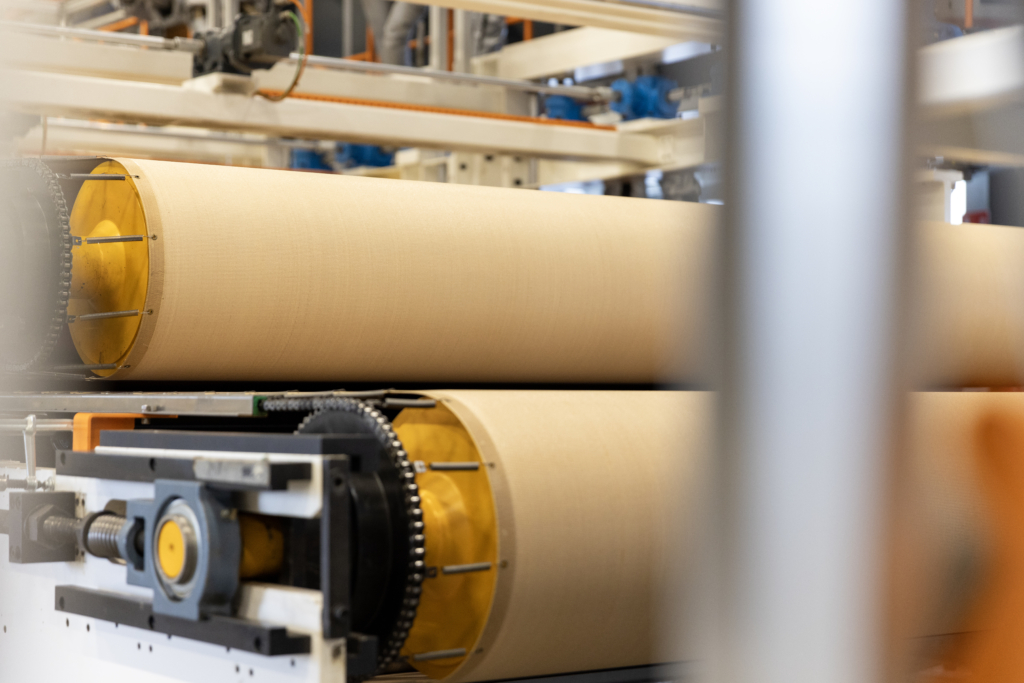
Sandwich panels are used in ground support equipment (GSE) for structural panels in cargo loaders, baggage carts, ground power unit enclosures, maintenance platforms, and equipment shelters. The combination of a lightweight core and stiff, fibre-reinforced skins delivers the load-bearing performance these applications demand at a fraction of the weight of steel or aluminium sheet construction. The sections below answer the most common questions GSE manufacturers ask when evaluating composite panels for their designs.
What types of ground support equipment use sandwich panels?
Sandwich panels appear across a wide range of ground support equipment, including cargo loaders, baggage handling carts, ground power unit (GPU) housings, aircraft steps and boarding platforms, maintenance access platforms, and tow bar storage units. Any GSE application that benefits from a high stiffness-to-weight ratio and resistance to impact and moisture is a candidate for composite panel construction.
In cargo loaders and container dollies, panels replace steel sheet in floor decks and side walls, reducing dead weight without sacrificing the load capacity needed to handle heavy freight. Baggage carts use composite side panels and floors to cut tare weight, which directly reduces fuel consumption per cycle across large fleets. GPU housings and equipment shelters benefit from panels that resist UV degradation and moisture ingress, both of which are constant challenges in outdoor airside environments.
Maintenance platforms and access steps are a particularly strong fit because the panel’s anti-skid surface finish can be integrated directly into the structure during manufacturing, removing the need for a secondary coating step. Boarding bridges and ground-level walkways face similar requirements: high foot-traffic loads, exposure to weather, and strict weight limits that prevent overloading the vehicle chassis beneath.
Why are sandwich panels replacing steel and aluminum in GSE?
Sandwich panels are replacing steel and aluminium in GSE primarily because they deliver comparable structural performance at significantly lower weight, which reduces fuel consumption, extends the service life of chassis and wheels, and lowers maintenance frequency. For electric GSE vehicles, weight reduction also extends battery range per charge, making it a procurement priority rather than a secondary consideration.
Steel and aluminium sheet construction carries inherent penalties beyond weight. Both materials corrode in the wet, chemically aggressive airside environment unless treated and maintained regularly. Composite sandwich panels with thermoplastic skins resist moisture, aviation fluids, and cleaning agents without surface treatment, reducing the maintenance burden over the equipment’s operating life.
The weight argument is especially direct in 2026, as airports and ground handlers accelerate electrification of their GSE fleets. Lighter body structures extend battery range in electric tugs, loaders, and carts. Every kilogram of structural dead weight reduces range per charge, making weight reduction a range argument, not just a payload argument. EV procurement teams at major ground handlers now treat panel weight as a specification input, not an afterthought.
Thermoplastic sandwich panels also offer a longer service life than aluminium sheet in high-impact applications. The glass-fibre-reinforced skins absorb and distribute impact energy rather than denting permanently, which means panels retain their structural integrity through the repeated knocks typical of baggage handling and cargo loading operations.
What structural properties make sandwich panels suitable for GSE?
The structural properties that make sandwich panels suitable for GSE are high bending stiffness, good compressive strength, impact resistance, and dimensional stability across a wide temperature range. These properties come from the sandwich architecture itself: stiff, fibre-reinforced skins separated by a lightweight core that resists shear loads and keeps the skins at a distance to maximise the panel’s second moment of area.
For floor panels in cargo loaders and maintenance platforms, compressive strength and bending performance under point loads are the governing requirements. A PP-honeycomb core at higher density provides the compressive resistance needed to handle concentrated loads from equipment wheels and freight pallets, while the glass-fibre skins carry the tensile and compressive stresses generated by bending.
For wall panels and equipment housings, the cross-ply skin architecture is particularly relevant. Orienting glass fibres at 0° and 90° in alternating layers produces balanced mechanical properties in both directions, so the panel performs consistently regardless of installation orientation. This matters in GSE enclosures where panels may be cut and fitted in multiple orientations during assembly.
Impact resistance is another property that distinguishes well-engineered composite panels from simple sheet materials. Continuous fibre-reinforced thermoplastic skins distribute impact energy across a wider area than metals, which tend to deform plastically at the point of contact. For baggage carts and cargo dollies that absorb daily impacts from luggage and freight, this translates directly into fewer panel replacements over the equipment’s operating life.
How are thermoplastic sandwich panels different from thermoset composites in GSE?
Thermoplastic sandwich panels differ from thermoset composites in GSE primarily in their repairability, recyclability, and manufacturing consistency. Thermoplastic skins can be re-formed with heat, which means minor damage can be repaired in the field without specialist equipment. Thermoset panels, once cured, cannot be re-melted and are more difficult to repair or recycle at end of life.
For GSE manufacturers operating under European sustainability requirements, the recyclability difference is commercially significant. The EU End-of-Life Vehicles (ELV) Directive and the Corporate Sustainability Reporting Directive (CSRD) are pushing OEMs and fleet operators to account for material recyclability across their supply chains. Thermoplastic panels, which can be reprocessed at end of life, align with these compliance requirements in a way that thermoset composites do not.
From a manufacturing standpoint, thermoplastic panels produced on a continuous double belt press offer tighter dimensional tolerances and more consistent skin-to-core bonding than many thermoset lay-up processes. This consistency matters for GSE manufacturers running serial production, where panel-to-panel variation creates fitment problems and slows assembly.
Thermoset composites retain advantages in very high-temperature applications and in some structural configurations where cure chemistry enables specific performance characteristics. But for the temperature ranges and load conditions typical of GSE, thermoplastic panels cover the requirement while offering better end-of-life options and easier integration into European supply chains.
What panel dimensions and configurations are available for GSE manufacturers?
Panels for GSE applications are available in dimensions up to 13,500 mm × 2,950 mm × 150 mm, with core thickness, core density, skin architecture, and surface finish all configurable to the specific load and environmental requirements of each application. This range covers virtually every GSE structural panel requirement, from small equipment housing walls to full-length cargo loader floor decks.
Core material selection drives the structural performance profile of the panel. PP-honeycomb cores at higher densities deliver the compressive and bending performance needed for floor panels under heavy point loads. PP-foam cores at lower densities suit wall panels and enclosure applications where weight minimisation is the priority and compressive loads are lower.
Skin architecture choices include cross-ply laminates for balanced bidirectional performance and multi-ply unidirectional laminates for applications where the dominant load direction is known. Surface finish options include white PET film for clean, finished interior surfaces and black anti-skid finishes for floor and platform applications where slip resistance is a safety requirement.
Panel thickness across the standard range runs from 11 mm to 30 mm, though custom thicknesses outside this range are achievable depending on the core and skin specification. For GSE manufacturers, the ability to specify panel dimensions to exact cut sizes reduces on-site fabrication work and material waste during assembly.
How do composite sandwich panels contribute to GSE sustainability goals?
Composite sandwich panels contribute to GSE sustainability goals by reducing vehicle weight, extending equipment service life, and enabling end-of-life recyclability. Each of these factors reduces the total environmental impact of ground support equipment across its operating life, from lower fuel or energy consumption during operation to fewer replacement cycles and less material waste at disposal.
Weight reduction is the most immediate sustainability lever. Lighter GSE vehicles consume less fuel per operating cycle in combustion-powered fleets and extend battery range per charge in electric fleets. As airports commit to net-zero ground operations targets, the energy efficiency of every vehicle in the fleet becomes a measurable sustainability metric, and panel weight feeds directly into that calculation.
Service life is the second factor. Thermoplastic composite panels last significantly longer than plywood or untreated aluminium sheet in the wet, chemically aggressive airside environment. Fewer replacement cycles mean less material consumed over the equipment’s operating life and less production energy expended on replacement panels. Over a 15-year equipment life, eliminating two or three replacement cycles represents a meaningful reduction in embodied carbon, not just a cost saving.
Recyclability closes the loop. Thermoplastic panels can be reprocessed at end of life, which supports compliance with the EU ELV Directive and aligns with CSRD sustainability reporting requirements that European ground handlers and their OEM suppliers increasingly face. For procurement teams that must report on material recyclability, thermoplastic composite panels offer a documentable advantage over thermoset alternatives.
How Compoform Supports GSE Panel Specifications
We work with GSE manufacturers at the design stage to match panel configuration to the specific structural and environmental demands of each application. Rather than supplying a standard panel and leaving integration to you, we review your load requirements, assembly process, and dimensional constraints before recommending a core density, skin architecture, and surface finish combination.
- Custom dimensions cut to your specification, up to 13,500 mm × 2,950 mm, eliminating on-site cutting and reducing assembly time
- Core and skin configuration matched to your load case, from lightweight PP-foam wall panels to high-density PP-honeycomb floor panels for heavy-duty cargo applications
- Anti-skid surface finishes integrated during manufacturing for platform and floor applications, removing a secondary processing step from your production line
- 100% European-made panels with consistent dimensional tolerances, supporting serial production without the fitment variation that offshore supply can introduce
- Engineering support through integration, including guidance on edge sealing and edge bending to protect the core from moisture and cleaning chemicals in airside environments
A 30 mm PP sandwich panel floor is self-supporting and requires no aluminium subframe, which removes a production step and reduces both cost and weight in loader and platform builds. That kind of configuration detail is what we work through with you before production starts, not after the first panels arrive on your assembly floor.
If you are specifying composite panels for a GSE application and want to review the configuration options against your structural requirements, speak with our engineering team to start the conversation.
Related Articles
- What sandwich panels are used in temperature-controlled cargo bodies?
- How are sandwich panels fixed in commercial vehicle floors?
- Can sandwich panels be custom-cut to non-standard dimensions?
- How do sandwich panels perform after repeated loading cycles?
- How much does aluminium really cost over its lifetime?