

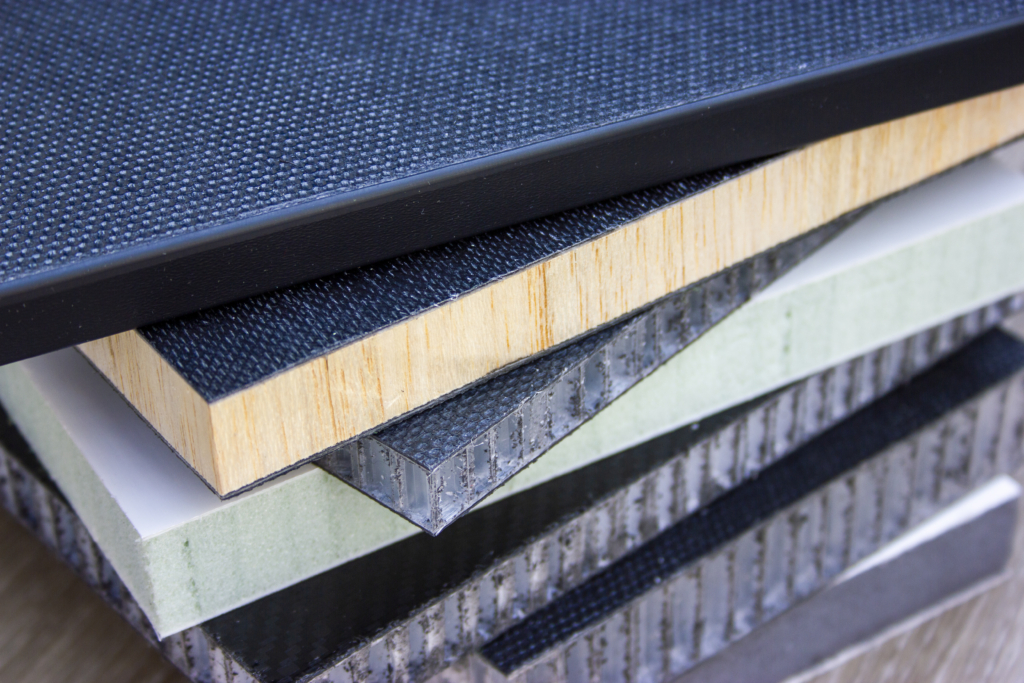
A PP honeycomb core provides low thermal conductivity, sitting around 0.036 to 0.040 W/(m·K) depending on density, which makes it a genuinely useful insulator for sandwich panel applications in commercial vehicles and transport structures. The polypropylene material itself is a poor conductor of heat, and the hollow cell geometry of the honeycomb structure traps air, reducing heat transfer further. The sections below cover operating temperature, thermal expansion, moisture behaviour, and how PP honeycomb compares to alternative core materials.
How well does a PP honeycomb core insulate against heat?
A PP honeycomb core insulates moderately well. The thermal conductivity of polypropylene honeycomb falls in the range of approximately 0.035 to 0.040 W/(m·K), which is significantly lower than steel or aluminium but higher than dedicated foam insulation materials. For structural sandwich panels in truck bodies and trailers, this level of thermal resistance is often sufficient to maintain stable interior temperatures without adding a separate insulation layer.
The insulating effect comes from two sources. First, polypropylene as a polymer is inherently a poor thermal conductor compared to metals. Second, the honeycomb geometry means a large proportion of the panel’s cross-section is air, and still air is one of the better natural insulators available. The combination produces a panel that resists heat transfer while remaining structurally rigid.
For refrigerated transport or temperature-controlled cargo environments, a PP honeycomb sandwich panel alone is unlikely to meet the thermal resistance requirements of insulated trailer standards. In those cases, the panel is typically used as a structural facing or floor component alongside dedicated insulation. For dry freight truck bodies, curtainsiders, and standard cargo trailers, the thermal performance of a PP honeycomb sandwich panel is generally adequate to reduce solar heat gain and limit temperature fluctuation inside the body.
It is worth noting that thermal conductivity values vary with panel density and skin configuration. Thicker panels and denser cores reduce heat transfer further, so the right specification depends on the specific application and operating environment for panels.
What temperature range can a PP honeycomb core withstand?
A PP honeycomb core performs reliably across a continuous service temperature range of approximately -40°C to +80°C. Short-term peak temperatures up to around 100°C are generally tolerable without permanent deformation, but sustained exposure above 80°C will begin to soften the polypropylene and reduce structural performance. At the cold end, PP honeycomb retains its mechanical properties well into sub-zero temperatures, making it suitable for northern European operating conditions.
This temperature range covers the vast majority of commercial vehicle applications. Truck bodies and trailers operating in European climates rarely exceed 70°C at the panel surface, even under direct summer sun. Floor panels in particular benefit from PP’s cold-temperature toughness, as loading dock environments and overnight parking in winter can expose panels to sustained freezing conditions.
Where panels are used near heat sources, such as exhaust routing or engine compartment proximity, the 80°C continuous limit is a relevant design constraint. In those cases, panel placement and any local heat shielding should be reviewed at the design stage. PP honeycomb is not suitable for applications requiring resistance to temperatures above 100°C, such as industrial ovens or high-temperature process environments.
How does thermal expansion affect PP honeycomb sandwich panels?
Thermal expansion in a PP honeycomb sandwich panel is governed primarily by the skin material, not the core. Glass-fibre-reinforced PP skins have a coefficient of thermal expansion (CTE) significantly lower than unreinforced polypropylene, which reduces the overall panel movement across temperature cycles. The mismatch between skin and core CTE is managed through the bonding process and panel design, but it remains a relevant consideration for large-format panels in outdoor applications.
Polypropylene as a base material has a relatively high CTE compared to metals or glass-reinforced composites. However, when the honeycomb core is laminated between glass-fibre skins, the skins dominate the panel’s dimensional behaviour. The glass fibres constrain thermal movement in the plane of the panel, and the result is a composite panel that expands and contracts far less than unreinforced PP would suggest.
For truck body builders and trailer manufacturers, this matters at panel joints and fixings. A 13.5-metre panel will still move measurably across a 60°C temperature swing from a cold winter night to a hot summer afternoon. Joint design, fixing methods, and any edge sealing need to accommodate this movement without creating stress concentrations or allowing water ingress at the joint line.
Higher-density cores show lower CTE values, which reflects the increased material content and reduced void fraction in the honeycomb structure. Specifying the right density for the application is therefore not just a structural decision but also a dimensional stability decision, particularly for large panels used in façade or flooring applications where flatness tolerance is tight.
Does a PP honeycomb core absorb moisture, and how does that affect thermal performance?
Polypropylene is inherently hydrophobic, meaning a PP honeycomb core does not absorb moisture. Water does not penetrate the cell walls of a PP honeycomb structure under normal service conditions. This is a meaningful advantage over natural fibre cores, paper honeycomb, and some foam materials that can absorb water over time, increasing weight and degrading both structural and thermal performance.
The practical consequence is that a PP honeycomb sandwich panel maintains its thermal properties across its service life, even in wet operating environments. Truck floors washed down daily, trailer walls exposed to rain and road spray, and scaffolding boards used outdoors in all weather conditions all present moisture challenges that PP honeycomb handles without degradation.
The one area where moisture management still matters is the panel edge. The honeycomb cells are open at the cut edge, and if water enters through an unsealed edge, it can accumulate inside the cells without being absorbed by the PP material itself. This does not damage the polypropylene, but standing water inside the cells adds weight and, in freezing conditions, can cause ice expansion that stresses the skin-to-core bond. Edge sealing eliminates this risk entirely and is standard practice for floor panels and scaffolding boards that face regular wash-down or outdoor exposure.
For thermal performance specifically, the non-absorbing nature of PP honeycomb means the panel’s insulating air volume stays intact. Wet insulation is poor insulation, and the fact that PP honeycomb does not become wet insulation is one of its durable advantages over alternative core materials in transport applications.
How do PP honeycomb thermal properties compare to foam and aluminium cores?
PP honeycomb sits between aluminium and foam cores in thermal performance. Aluminium honeycomb conducts heat readily and provides almost no insulation value on its own. Foam cores, particularly closed-cell foams, offer lower thermal conductivity than PP honeycomb and are better insulators by volume. PP honeycomb trades some insulation performance for superior structural properties, moisture resistance, and recyclability.
The table below summarises the key thermal differences across core types relevant to commercial vehicle and transport panel applications.
- PP honeycomb: Thermal conductivity approximately 0.035 to 0.040 W/(m·K). Non-absorbing. Stable across -40°C to +80°C. Fully recyclable under the EU ELV Directive.
- PP foam (closed-cell): Thermal conductivity approximately 0.040 to 0.043 W/(m·K) at lower densities, improving slightly at higher densities. Also non-absorbing and recyclable. Better suited to wall panels where insulation is a primary requirement alongside structure.
- Aluminium honeycomb: Thermal conductivity is orders of magnitude higher than polymer cores. Aluminium conducts heat efficiently, making it a poor insulator. It is used where structural performance and weight are the primary drivers and thermal resistance is not required.
For truck body wall panels where some thermal resistance is useful, a PP foam core at 60 kg/m³ delivers comparable insulation to PP honeycomb while offering a lighter areal weight for the same panel thickness. For floor panels where compressive strength and point load resistance are the priority, PP honeycomb at 140 kg/m³ is the stronger choice, with thermal performance that remains adequate for the application.
The comparison with aluminium is also relevant from a weight perspective. Aluminium subframes and floor structures add significant dead weight to a truck body or trailer. Replacing them with a self-supporting PP honeycomb sandwich floor removes that weight from the structure entirely. In electric trucks and vans, every kilogram of structural dead weight reduces battery range per charge, making weight reduction a range argument as much as a payload argument. EV fleet procurement teams in 2026 are increasingly asking about structural weight as part of their range planning, and a self-supporting composite floor is a direct answer to that question.
How Compoform Supports Your Panel Specification
We manufacture PP honeycomb sandwich panels for commercial vehicle floors, truck body walls, and scaffolding boards, and we work with you to match the panel configuration to your specific thermal, structural, and dimensional requirements. Our panels are produced at our facilities in Beek and Ospel in the Netherlands, and every specification is European-made.
When you bring us a project, here is what the process looks like in practice:
- Application review: We assess your operating environment, temperature range, moisture exposure, and load requirements before recommending a core density and skin configuration.
- Edge sealing and edge bending: For panels used in wash-down environments or outdoor scaffolding applications, we apply edge protection that seals the honeycomb cells against water ingress, protecting both structural integrity and long-term thermal performance.
- Custom dimensions: Panels are available cut to your exact specification, up to 13,500 mm × 2,950 mm, without the minimum-order constraints that make custom sizing impractical with commodity suppliers.
- Self-supporting floor panels: A 30 mm PP honeycomb floor panel is self-supporting with no aluminium subframe required. This removes a production step and reduces both vehicle weight and assembly cost for truck body builders.
- Lifespan and TCO: Thermoplastic composite floors last 12 or more years in heavy transport service, compared to 3 to 5 years for plywood. Over a 15-year vehicle life, that eliminates two or three replacement cycles. Once you factor in panel cost, installation labour, and vehicle downtime, the composite floor is cheaper per year of service even at a higher unit price.
If you are specifying panels for a truck body, trailer floor, or scaffolding board and want to review the thermal and structural configuration for your application, contact our engineering team for panel advice. We review your design, optimise the panel build for your assembly process, and flag issues before production starts, not after the first batch arrives.
Related Articles
- How does a PP honeycomb core distribute load across a sandwich panel?
- How do sandwich panels increase payload capacity in trailers?
- How do lightweight sandwich panel floors reduce fuel consumption per trip?
- How do sandwich panels contribute to lower total cost of ownership?
- Sandwich panel vs aluminium: which is lighter?